
As procurement managers, you’re tasked with balancing upfront hardware costs against long-term operational efficiency and network reliability. A common question arises when evaluating installation accessories: “Can a simple $2 wall-mount ONT bracket genuinely justify its cost?” The answer, backed by field operations data, is a resounding yes—and the return on investment extends far beyond the initial purchase price. Let’s break down the math and the broader supply chain impact.
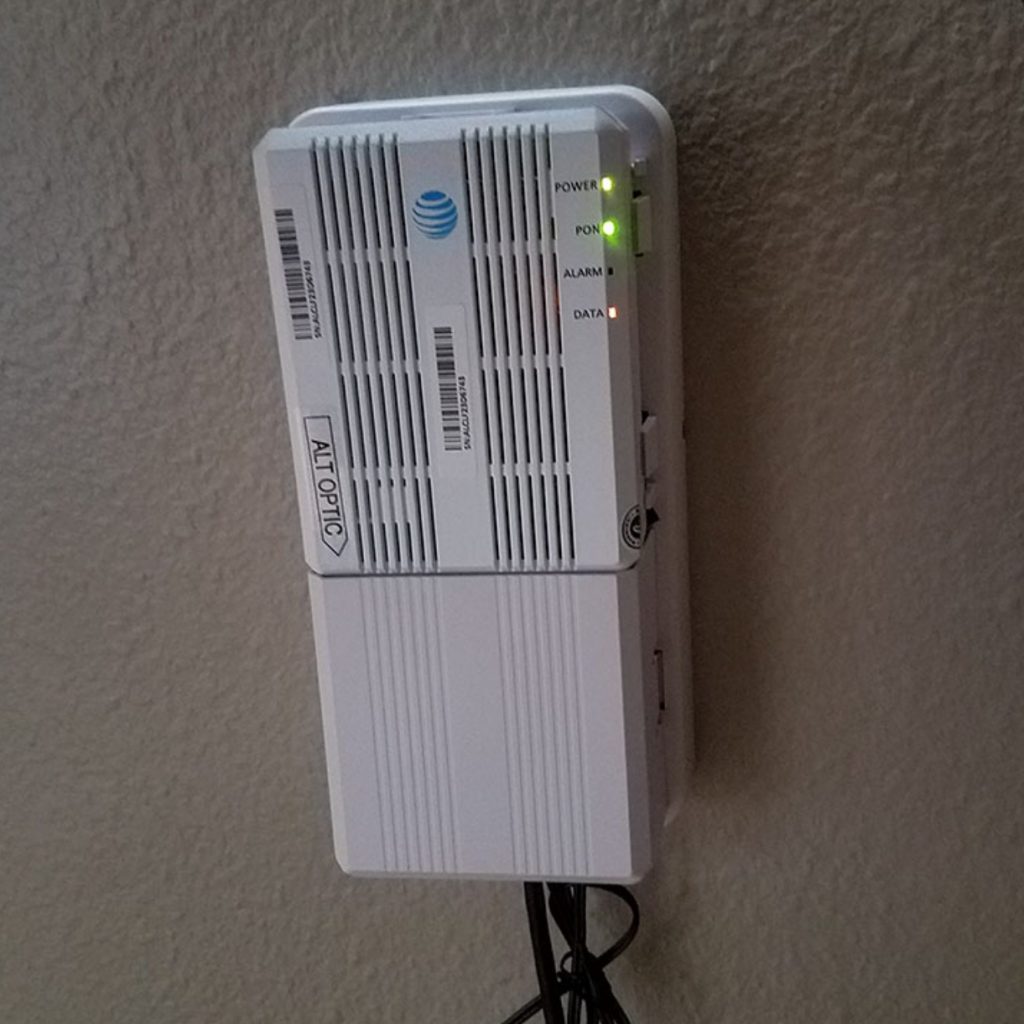
The Direct Labor Savings: The $10-Proof
The core value proposition lies in standardization and simplification. Consider the field technician’s workflow without a dedicated bracket:
- Time-Consuming Improvisation: The technician must locate studs, possibly drill multiple holes, manage fiber slack manually with separate tie-wraps, and secure the ONT—all while meticulously maintaining the fiber bend radius. This process is variable, skill-dependent, and slow.
- The “Oops” Factor: Without guided routing, the risk of over-bending the fiber during or after installation is high. This can lead to immediate signal issues requiring re-work, or a latent defect causing a future trouble ticket.
A well-designed bracket with integrated clips and routing eliminates these variables. It turns a multi-step, custom job into a quick, repeatable process:
- Faster Install: Consistent, guided routing can shave 3-5 minutes off each installation. At a fully burdened labor rate of $40-$60/hour, saving just 3 minutes equates to $2-$3 in direct labor cost avoidance per job.
- Avoided Re-Work & Truck Rolls: This is where the major savings materialize. A single callback due to installation-related signal loss (often from bend radius violation) costs a minimum of $50-$100 in truck roll and technician time. If a $2 bracket prevents even a small fraction of these callbacks, the ROI is enormous. Conservatively, if it prevents just 2% of installations from needing a follow-up visit, it saves $1-$2 per installed unit upfront. Combined with the time savings, the $10+ per-installation labor saving is readily achievable.
Beyond Labor: The Full ROI Spectrum
The financial impact extends into broader operational and capital metrics:
- Reduced Mean Time to Repair (MTTR): Future in-home repairs are faster. The organized slack and clear routing make it easy to access and re-terminate fibers if needed.
- Improved First-Time-Right (FTR) Rate: Standardized hardware drives consistency, reducing installation errors and post-install support calls. This boosts customer satisfaction (CSAT) and Net Promisoer Score (NPS).
- Lower Inventory & Training Complexity: A single, complete kit (bracket, screws, clips) simplifies the technician’s truck stock and warehouse logistics. It reduces the need for multiple loose parts (different tie-wraps, anchors, clips). It also streamlines training—there’s one approved, optimized method.
Supply Chain & Strategic Procurement Perspective
From your desk, the evaluation shifts from unit cost to total cost of ownership (TCO) and risk mitigation.
- TCO Over Unit Price: The .50−1.00 price difference between a basic plate and a premium bracket with proper clips is negligible within the BoM of an ONT install. However, that small premium buys significant insurance against the high variable costs of field labor and truck rolls. Your KPI should be cost per passed homeand cost per connected home maintained over 5 years, not just component cost.
- Supply Chain Resilience: A reliable bracket standardizes a critical part of the install. Sourcing this from a qualified vendor becomes a partnership in quality assurance, reducing variability-induced failures in your network.
- Scaling Deployment: As you accelerate fiber rollouts, consistent, fast, and error-proof installation processes are mandatory. This hardware enables less-experienced technicians to perform at a high-quality level, supporting scalable workforce expansion.
The Verdict: An Investment, Not a Cost
Framing the $2 bracket as a mere cost item misses the strategic point. It is a force multiplier for your most expensive asset: your field technicians. It is a proactive quality control checkpoint that prevents far more expensive downstream failures.
Recommendation:
Pilot these brackets against a control group. Measure:
- Average install time difference.
- Reduction in installation-related trouble tickets within the first 30 days.
- Technician feedback on ease of use.
The data will conclusively show that this minor capital expenditure generates an outsized operational return, protecting your network’s performance and your company’s bottom line. In the calculus of FTTH deployment, optimizing the final foot of the network is not a detail—it’s a decisive factor in profitability.
Ready to streamline your FTTP installations and enhance network reliability? Contact our sales team to discuss your requirements, request a free sample, or get an instant quote. Reach us via email at [email protected] or message us directly on WhatsApp at +8613817004898.