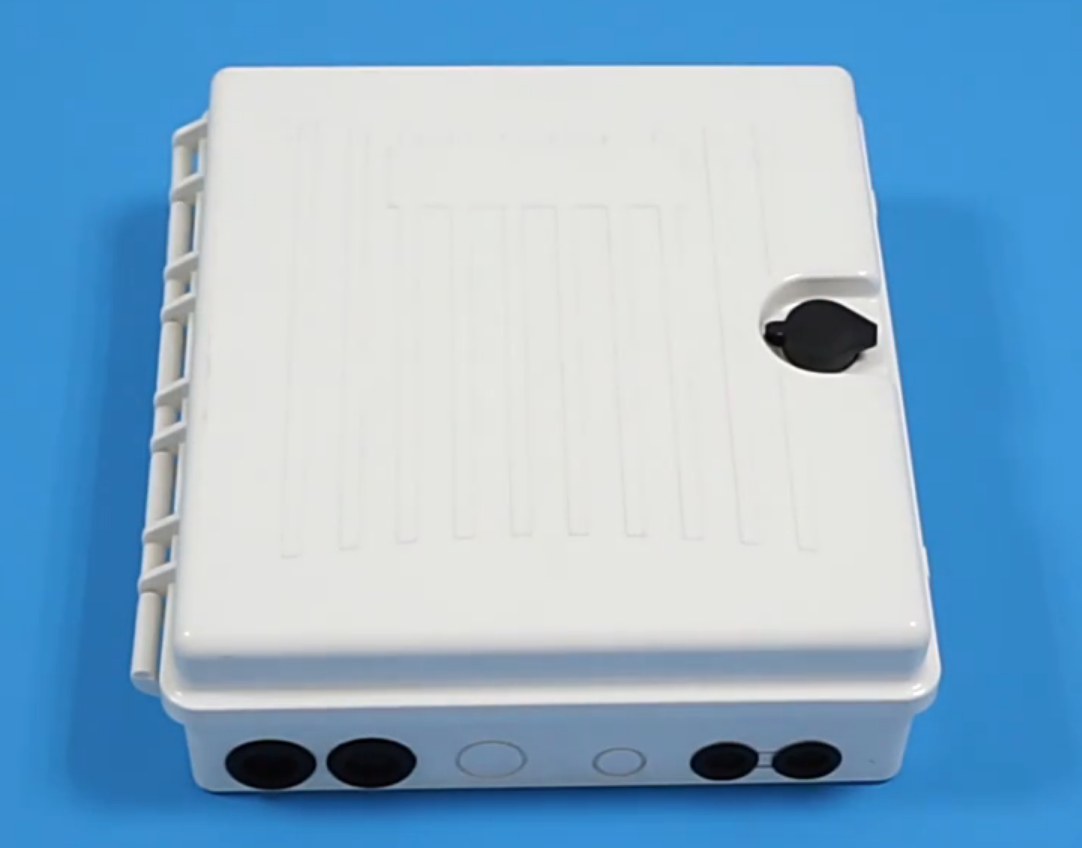
MDU Fiber Distribution Boxes
The MDU fiber distribution box is the main coordination point between the incoming network and the fibers serving floors or apartments. It may receive an outside-plant feeder, terminate a riser cable, house PLC splitters, organize splices, and provide connectorized ports for downstream distribution. Its layout influences how easily technicians can install the building, activate additional subscribers, identify fibers, and perform restoration work.
Operators should begin with the building architecture: centralized splitting, distributed splitting, pre-terminated riser, or conventional splice-based distribution. The box must then be sized for feeder count, splitter format, splice capacity, adapter ports, cable entries, slack storage, growth allowance, locking, fire-rating expectations, and the available wall or cabinet space. A high theoretical capacity is not useful if the internal routing becomes congested or active fibers must be moved during every activation.
Explore the products below by building size, network architecture, capacity, and installation environment. Open the relevant product links to compare internal layouts, tray and splitter compatibility, dimensions, cable glands, materials, access control, labeling, mounting accessories, packaging, and customized configurations for your MDU construction standard.