
For distributors, utility contractors, broadband construction companies, and low-voltage infrastructure teams, fabric innerduct is not just another cable pathway accessory. It helps contractors make better use of existing conduit, organize multiple cable routes, reduce wasted duct space, and prepare pathways for future fiber upgrades.
That is why many contractors use MaxCell-style fabric innerduct in telecom, utility, campus, data center, municipal broadband, and FTTH construction projects. The problem is that long lead times can quickly turn a good product specification into a supply chain bottleneck.
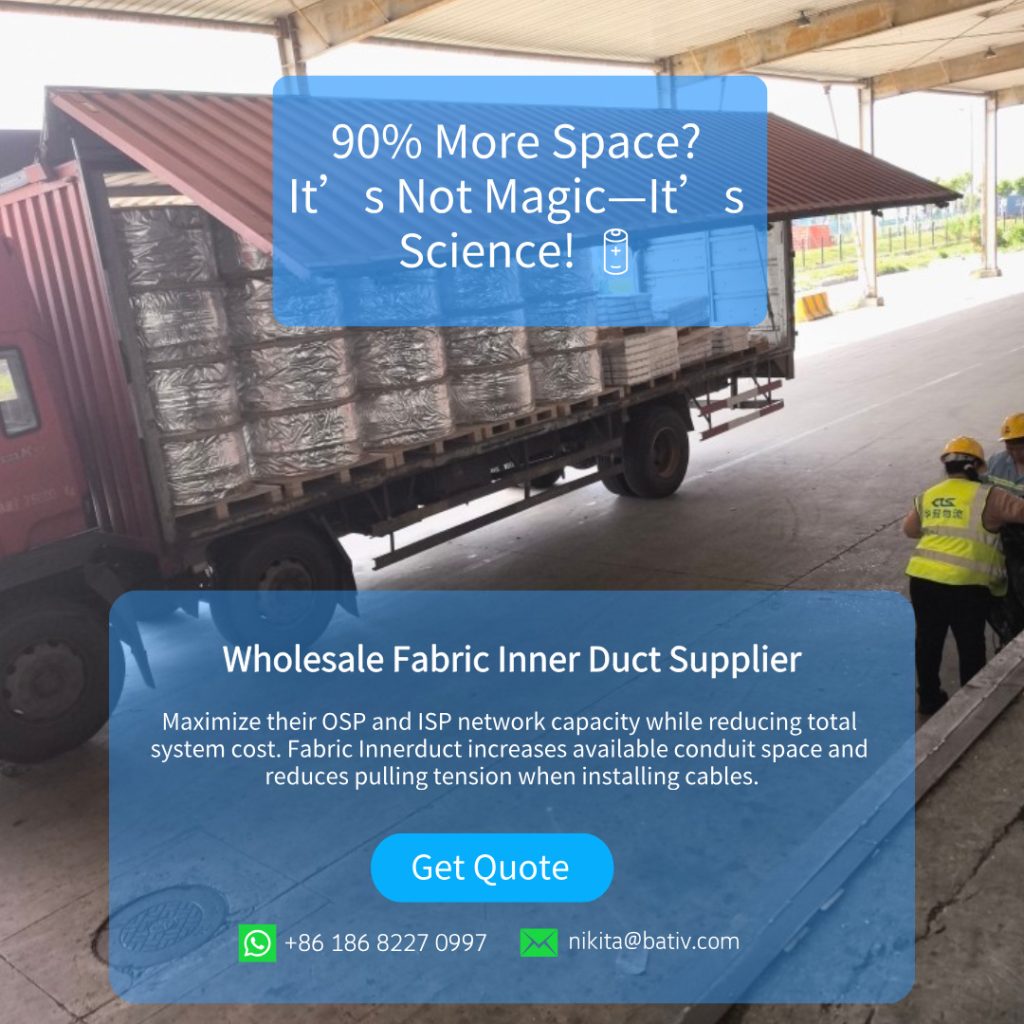
When a contractor has a crew scheduled, conduit access prepared, permits in place, and cable waiting for installation, delayed innerduct can slow down the entire job. For a distributor, that creates a direct business problem: the customer still needs the job completed, but the preferred brand may not be available fast enough.
This is where a qualified fabric innerduct alternative can create real value.
The Real Job: Keep Contractors Working
Most contractors are not looking for a “cheap replacement.” They need a product that can complete the same field task without adding risk.
A good alternative should help them:
- Maximize existing conduit space without adding new rigid innerduct.
- Separate and organize multiple fiber or communication cables inside one conduit.
- Reduce cable-to-cable interference during pulling.
- Support future pathway expansion when additional cables may be installed later.
- Avoid job delays caused by unavailable materials.
- Keep installation methods familiar for field crews.
If an alternative product cannot support the contractor’s installation workflow, it is not a real substitute. Price only matters after the product fits the task.
Why Long Lead Times Create an Opening for Alternatives
Long lead time is not a small inconvenience for distributors. It affects quoting, inventory planning, contractor trust, and project scheduling.
When a contractor asks for MaxCell or another known fabric innerduct brand, they are often asking for a category solution, not necessarily only one exact brand. They may need a 2-cell, 3-cell, or 4-cell textile innerduct that fits a defined conduit size and supports a defined cable installation plan.
If the original brand is delayed, the distributor has an opportunity to provide value by offering a technically suitable alternative with better availability.
The key is to make the alternative easy to approve.
That means the supplier should provide clear technical data, product photos, sample reels, packing information, installation guidance, and a comparison sheet that helps the contractor confirm whether the product is suitable for the job.
What Distributors Should Check Before Offering a Fabric Innerduct Alternative
Before replacing a known product in front of a contractor, distributors should confirm the specification carefully. The goal is not to “match the name.” The goal is to match the field application.
Important selection points include:
- Conduit size: Is the product intended for 2″, 3″, 4″, or another conduit size?
- Cell count: Does the project require 2-cell, 3-cell, 4-cell, or a custom structure?
- Cable type: Will the pathway carry fiber optic cable, coaxial cable, power-limited cable, or mixed low-voltage communication cable?
- Pulling method: Does the innerduct include pull tape or pulling line?
- Detectability: Does the project require a detectable version for locating buried pathways?
- Material and construction: Is the fabric strong enough for the intended pulling environment?
- Packaging: Is the product supplied in reels, boxes, bags, or contractor-friendly units?
- Lead time: Can the supplier support repeat orders and not only one sample shipment?
- Documentation: Can the supplier provide datasheets, photos, test data, and labeling support?
A serious supplier should help the distributor answer these questions before the contractor asks them.
The Best Initial Opportunity: Contractor Trial Kits
For many distributors, the easiest way to introduce an alternative is not to push a full replacement immediately. A better approach is to offer a sample or trial kit.
A contractor trial kit may include:
- Several fabric innerduct samples by cell count.
- Product specification sheets.
- Pull tape information.
- Packing and reel details.
- Application photos.
- A comparison guide against common fabric innerduct use cases.
- Recommended questions for project approval.
This reduces friction. The contractor can touch the material, compare construction, and test whether the product fits the conduit and pulling method.
Once the field team accepts the alternative, the distributor can move from sample support to project supply.
Why Chinese Supply Can Work for U.S. Distributors
Some distributors hesitate to source directly from overseas because they worry about communication, consistency, shipping time, and after-sales support. Those concerns are valid.
A good overseas supplier must make the process easier, not more complicated.
For fabric innerduct, a distributor-friendly supplier should support:
- Fast sample dispatch for qualification.
- Clear MOQ and price breaks for trial orders and bulk orders.
- Consistent product construction across repeat purchases.
- Private label or neutral packaging if required.
- Export packing suitable for U.S. distribution.
- Specification confirmation before production.
- Responsive communication during contractor approval.
- Stable production planning for repeat demand.
The opportunity is strongest when the overseas supplier is not only selling a product, but helping the distributor build a reliable alternative supply line.
Where This Alternative Is Most Useful
Fabric innerduct alternatives are especially relevant in projects where conduit space and schedule pressure matter.
Common opportunities include:
- Existing conduit retrofit: adding new fiber capacity without new trenching.
- Municipal broadband: expanding fiber pathways under budget and time constraints.
- Utility communication networks: protecting and organizing communication cable pathways.
- Campus networks: upgrading fiber routes between buildings.
- Data center and enterprise pathways: organizing high-value fiber cable in congested duct systems.
- FTTH overbuilds: preparing pathways for additional drops, distribution fibers, or future upgrades.
- Contractor maintenance work: replacing delayed or unavailable materials without stopping the job.
In all of these cases, the buying decision is driven by the same question: can this product help the contractor complete the job safely, quickly, and without unexpected rework?
How Distributors Can Position the Alternative
Distributors should not present the product as a “cheaper copy.” That weakens trust.
A stronger positioning is:
“This is a fabric innerduct alternative for contractors who need shorter lead times, flexible sourcing, and project-ready supply. We can provide samples, specification review, and bulk support so your team can qualify it before full deployment.”
This message speaks directly to the buyer’s real pain: not just price, but availability, confidence, and continuity.
The best customers for this offer are not only contractors already using MaxCell. They also include electrical contractors, utility construction companies, telecom construction firms, broadband installers, campus network contractors, and distributors that serve low-voltage infrastructure projects.
What to Send in the First Reply
When a distributor asks whether you have U.S. contacts selling your products, the answer should not be only “yes” or “no.”
A better reply should include:
- Whether you currently have U.S. stock, partners, or direct export support.
- Whether you are open to distributor cooperation.
- Available fabric innerduct types and common specifications.
- Sample availability and lead time.
- Bulk order lead time.
- Packaging and private label options.
- A request for their most common MaxCell sizes and customer applications.
The goal is to move the conversation from general interest to specification matching.
Final Takeaway
When MaxCell lead times are long, contractors still need to finish projects and distributors still need to protect customer relationships. A qualified fabric innerduct alternative gives distributors a practical way to solve both problems.
The opportunity is not only to sell product. It is to help distributors build a dependable supply option for contractors who need conduit space optimization, fiber pathway organization, and faster material availability.
For distributors serving telecom, utility, data center, municipal broadband, and low-voltage contractors, the right alternative can become more than a backup. It can become a repeatable sourcing advantage.